
The Breath — Part 3
Why it's gone by Friday.
A state isn't a trait — yet
You felt your head clear in sixty seconds. Here's why it didn't last — and how to make it stay.
Last time, we spent sixty seconds on one long, complete exhale — and if you tried it, your head probably cleared a little. Then Monday you did it once, Tuesday you forgot, and by Friday you were back at the same 3 o’clock wall, breathing the same high, shallow chest you started with. You didn’t fail. You just met the difference between a state and a trait — which is the whole reason a good breath is so easy to feel and so hard to keep.
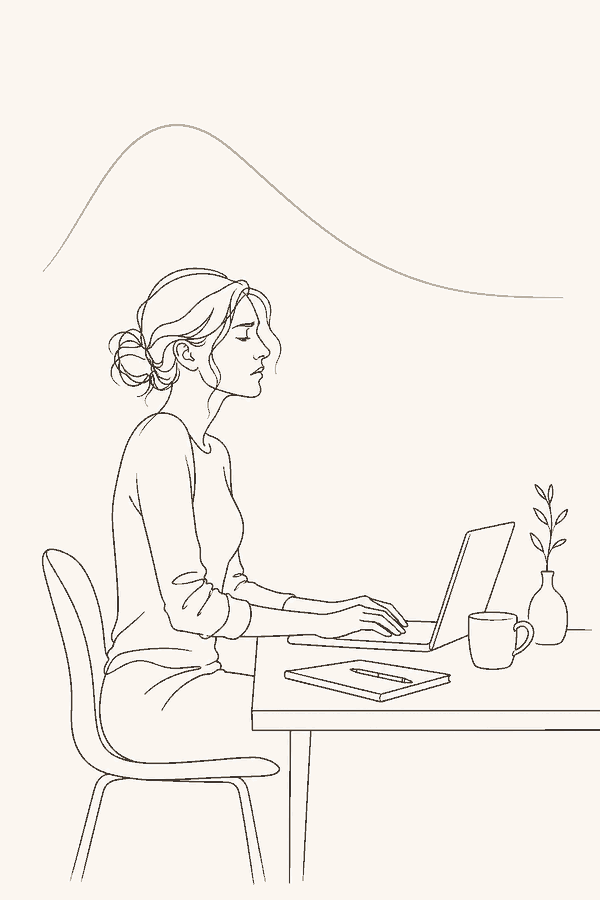
A state has a half-life
That clear-headed minute was real. It was also rented. For sixty seconds you were consciously overriding a pattern your body runs thousands of times a day — the high chest, the clipped exhale, the low idle of alert. The instant your attention moved on, the old pattern won, because the old pattern is trained and the new one isn’t — yet.
This is not a willpower problem. You can’t white-knuckle a new resting breath any more than you can white-knuckle new handwriting. The default always wins on reps. So the real question was never can I do the good breath — you just proved you can. It’s: how does the good breath become the one your body reaches for on its own?
Try this now — 60 seconds
The anchor
Don’t try to remember to breathe well. You won’t — and that isn’t a character flaw, it’s how attention works. Instead, bolt one complete exhale onto something you already do without fail, dozens of times a day. Pick one cue right now: every time you sit down, every time you hit Send, every doorway you walk through. Choose exactly one.
Now rehearse it three times. Picture the cue — say, sitting down at your desk. The instant it happens: one long, quiet exhale, ribs settling all the way down and in, then carry on. Do it again. And once more. That’s the whole technique — not a practice you schedule, but a rep you hide inside a habit you already have.
You’re not adding a practice. You’re smuggling reps into a habit you already run on autopilot.
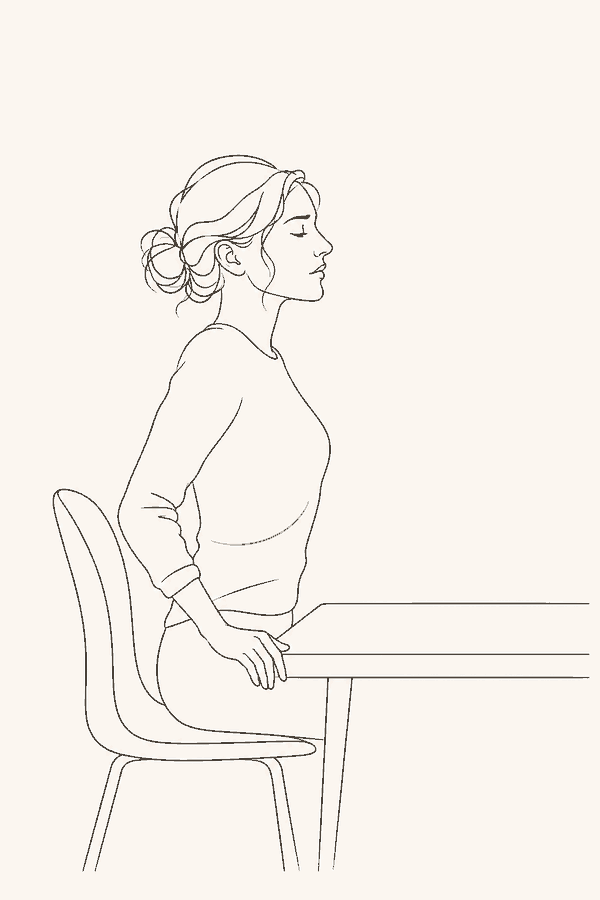
A state isn’t a trait — yet
You may notice this whole series keeps circling one unglamorous idea: the exhale isn’t a trick you perform, it’s a default you rebuild.† Last letter was about feeling it. This one is about keeping it — and keeping it is a different kind of work. Not harder breaths. Not longer sessions. More reps, woven into more of your day, until the low, complete breath stops needing you to run it and simply becomes how you sit, work, and wait for the elevator.
In a Postural Restoration program — and in the Pneuma protocol we build on it — that’s the actual goal: not a good breath on command, but a new resting position the nervous system holds without being asked.† The drills, the balloons, the reference cues all exist to make a new default automatic. The felt minute is the start line, not the finish.
How a thing you do becomes a thing you are
Every skill you now run without thinking — driving, typing, your own signature — began as effortful, attention-hungry work and moved, with repetition, into automatic control handled by deeper brain systems, freeing your attention for everything else.1 That migration from effortful and conscious to automatic and cheap is exactly the trip a breath can make. The clear-headed minute feels expensive right now because it’s still being run the hard way. Reps are what make it cheap.
How long does that take? The most-cited real-world study of everyday habits found automaticity arrived on average around two months — but with an enormous spread, from about three weeks to the better part of a year, depending on the person and the behavior.2 The shape matters more than the number: slow at first, then easier, and never on a fixed date. Missing a day didn’t reset the clock. So the honest promise isn’t “21 days to a new you.” It’s sooner than you fear, later than you’d like, and it holds if you keep going.
This is also why the anchor beats resolve. Deciding in advance exactly when and where a behavior happens — an “if this, then that” plan tied to a cue that already fires — reliably raises the odds you actually do it, with a solid moderate effect measured across hundreds of studies.3 You’re not recruiting more discipline. You’re handing the job to a trigger that goes off on its own.
And now the honest crux, because it’s the one that matters: does any of this move your resting breath, or only the minute you’re paying attention? The best answer the evidence supports is a careful yes. Weeks of slow-breathing and heart-rate-variability practice can measurably shift stress physiology, and pooled trials show real reductions in stress and anxiety.4 But — said plainly — the strongest, cleanest effects still cluster around the practice itself, and durable shifts in your all-day resting baseline are more modest and more variable across studies.5 Translation: your default can move. It moves slowly, it’s partial, and it’s earned by frequency, not intensity. That’s not a hedge — it’s the actual finding, and it’s why we run a program instead of handing you a breathing tip.
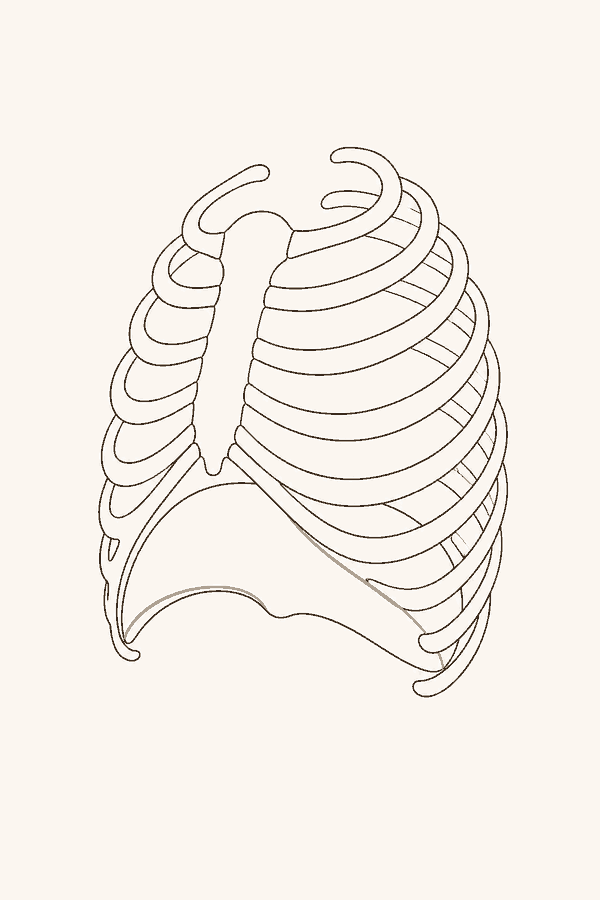
The leverage is frequency, not effort
Thirty single exhales scattered through the day — each one catching you mid-over-rev — teach your nervous system more than one heroic twenty-minute session you have to remember to schedule. For durable learning, practice spread thin and repeated in context beats the same effort crammed into one block.6 Little and often is what lasts. Rare and heroic doesn’t.
One honest caveat
This is ordinary habit change, and the same honesty from last time holds: a trained breath is a genuine tool, not a treatment. If your fog, fatigue, or breathlessness is persistent, worsening, or new, it can come from things reps won’t touch — disrupted sleep, blood-sugar swings, thyroid, anemia, medication, anxiety or depression — and deserves a proper workup. Breath work complements that; it doesn’t replace it. Nothing here is medical advice.
Where this meets the method
This is the honest reason the Pneuma Protocol is a program and not a pamphlet. Look back at last letter’s four steps — restore, own, integrate, load. The first is a good minute. The middle two — integrate and load — are the entire state-to-trait engine, and they’re exactly the parts you can’t reliably organize for yourself: the right cue, the right dose, the right progression, and someone watching whether the new default is actually holding or quietly slipping.†
Left alone, almost everyone drifts back to the pattern they’ve rehearsed the longest. The work is out-repping that old default until the new one is the one that wins. Here’s what that looked like on the same person you met last time.
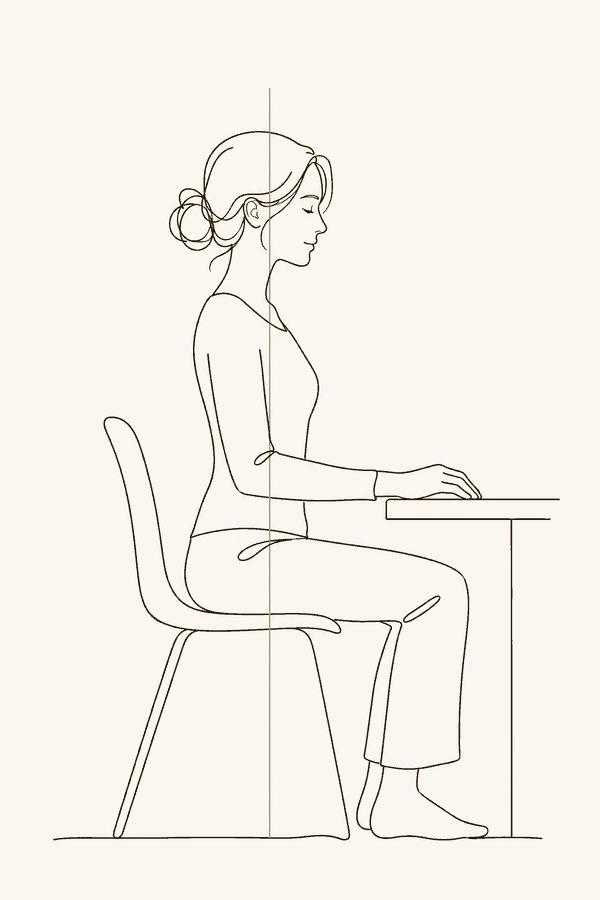
A case in point — eight weeks on
Remember the founder from last time — the one certain her 3 p.m. collapse was a sleep problem. Here’s what the next eight weeks actually looked like, because it’s the part nobody shows you.†
Weeks one and two were quietly discouraging. The minute worked every time she did it — and she kept forgetting to do it. She felt like she was failing at breathing, of all things. So we stopped asking her to remember, and started building the reps she wouldn’t have to initiate.
| Week | What happened |
|---|---|
| Wk 1–2 | Stop relying on memory. We anchored the exhale to cues she couldn’t miss — every time she sat down at her desk, every time she closed her laptop. Nothing to schedule, nothing to white-knuckle. The point wasn’t more effort; it was more reps she didn’t have to start. |
| Wk 3–6 | She started catching herself. Mid-shallow-breath, mid-shoulder-hike, without trying — the noticing was coming online on its own. That’s the first real sign the pattern is becoming hers: you can only retrain what you can feel.7 |
| Wk 6–8 | The reset began happening on its own. The 3 o’clock wall got smaller and rarer. A morning check showed her resting breath sitting lower and calmer than where she started — the state beginning to set into a trait.† |
| Ongoing | Load it. Now we build it under demand — our Pneuma protocol — so the calm, clear setting holds when the day gets loud, not only when she’s sitting still.† |
She didn’t find more discipline. She stopped needing it — because the good breath had quietly become the one her body reached for first.
Why a trait is worth the wait
Not a bigger breath. A quieter default.
A state resets every morning. A trait compounds. Every rep you no longer have to think about is a little attention and a little calm handed back to the rest of your life — the long call, the hard paragraph, the walk through your own front door still carrying something left in you. You’re not buying one good hour. You’re lowering the idle the whole day runs on, until you stop noticing you did it.
And the same plain note as before: the Pneuma protocol under all of this isn’t finished, and isn’t meant to be. It’s a living method I’m actively developing — right now in collaboration with a psychologist — setting it down step by step so every claim earns its place. What you’d meet in the studio is that method, still being sharpened.
The fine print
-
The move from effortful to automatic control is the classic three-stage model of motor learning — Fitts PM, Posner MI. Human Performance. Brooks/Cole; 1967 (cognitive → associative → autonomous). Modern imaging supports a shift in which brain systems carry the skill as it automatizes: Doyon J, Benali H. Reorganization and plasticity in the adult brain during learning of motor skills. Curr Opin Neurobiol. 2005;15(2):161–167; and Floyer-Lea A, Matthews PM. Distinguishable brain activation networks for short- and long-term motor skill learning. J Neurophysiol. 2005;94(1):512–518, where three weeks of training shifted activity toward subcortical (basal-ganglia) control. Limitation: this literature is built on limb-motor tasks and measures a change in which brain regions activate, not demonstrated structural rewiring; applying it to a breathing pattern is a well-motivated analogy, not a study of breathing itself.
-
Lally P, van Jaarsveld CHM, Potts HWW, Wardle J. How are habits formed: modelling habit formation in the real world. Eur J Soc Psychol. 2010;40(6):998–1009 — median time to automaticity ≈ 66 days, individual range ~18 to 254 days; the curve is asymptotic and a single missed day did not break it. Limitation: small and fragile — of ~96 volunteers, only 39 gave a clean curve fit, the behaviors were trivially simple (e.g., a glass of water after breakfast), automaticity was self-reported, and the 254-day figure is extrapolated from the fitted curve beyond the study’s 84 days. Treat the shape and the wide spread as the lesson, not “66 days” as a target. (The popular “21 days” is a myth with no basis in habit research.)
-
Gollwitzer PM, Sheeran P. Implementation intentions and goal achievement: a meta-analysis of effects and processes. Adv Exp Soc Psychol. 2006;38:69–119 — “if-then” plans linking a behavior to a specific cue had a medium-to-large effect (d ≈ 0.65) on goal attainment across 94 tests; foundational statement in Gollwitzer PM. Am Psychol. 1999;54(7):493–503. Limitation: these are mostly short-to-medium-term behavioral goals, not resting-breath retraining; and this 2006 estimate is from the theory’s own authors — more recent, larger, pre-registered trials tend to land lower (d closer to 0.2–0.4), so read 0.65 as an early upper bound.
-
Goessl VC, Curtiss J, Hofmann SG. The effect of heart rate variability biofeedback training on stress and anxiety: a meta-analysis. Psychol Med. 2017;47(15):2578–2586 — across 24 studies (484 participants), slow-breathing HRV-biofeedback produced a large reduction in self-reported stress and anxiety (Hedges’ g ≈ 0.81 within-group, 0.83 vs. control). Limitation: the outcome here is how anxious people felt — a state/symptom effect — not a measured rise in resting autonomic baseline; total sample is small, protocols vary, and reporting is self-report-heavy.
-
The distinction between an acute (in-the-moment) effect and a durable baseline shift is the crux, and the evidence is honestly uneven. Voluntary slow breathing reliably raises vagally-mediated HRV during and shortly after practice (Laborde S, et al. Effects of voluntary slow breathing on heart rate and heart rate variability: a systematic review and meta-analysis. Neurosci Biobehav Rev. 2022;138:104711), but evidence that it durably raises your 24-hour resting HRV is thinner, shorter-duration, and more mixed. We state the baseline can move — slowly and partially — rather than promising it will.
-
Distributed practice (reps spread out) generally beats massed practice (reps crammed together) for durable retention: Donovan JJ, Radosevich DJ. A meta-analytic review of the distribution of practice effect. J Appl Psychol. 1999;84(5):795–805. Limitation: the size of the advantage depends on the task — larger for simpler tasks — and “how spread out is best” isn’t settled; the directional point (spread beats cram) is well supported.
-
Interoception — the sense of your own internal state — is treated as a foundation for self-regulation: Farb N, et al. Interoception, contemplative practice, and health. Front Psychol. 2015;6:763. Limitation: a theoretical/review synthesis; the link between “noticing” and durable change is associational and still being mapped, not a proven lever.
If any of this changed how you think about your own body, an assessment is where that conversation starts.