
Strength isn't just built. It's released.
Your body has a brake
Most people aren't weak — they're braked. Take the brake off and strength you already had becomes available.
The fitness world is built on one idea: add. More weight, more volume, more time. The bigger gains are often hiding in the opposite direction. A lot of people aren’t weak — they’re braked, held back by a protective limit the nervous system won’t release. Take the brake off and they don’t slowly build strength. They suddenly express strength they already had.
Originally sent to AER members as an email. The exact send date wasn’t recovered — the date shown reflects publication order, not a precise record.
Your body has a brake
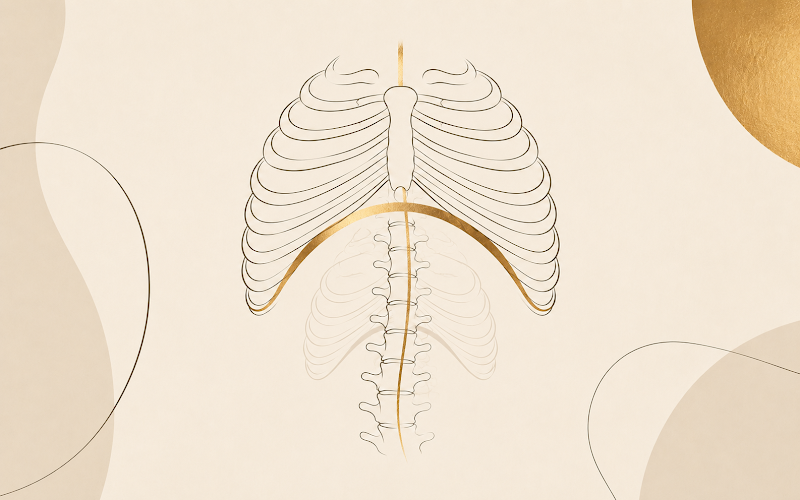
When the body is organized in a way it doesn’t trust, the nervous system quietly caps how much range — and how much force — it will allow. It’s a safety setting, and it’s usually invisible. The work is to change the underlying organization so the cap lifts. What’s left is capacity that was always there, finally reachable.†
The foundation under that idea is not controversial. When you start training, your earliest and fastest strength gains are overwhelmingly neural — your nervous system learning to use the muscle you already own — long before new muscle could possibly account for the numbers.1 Track it directly and you can watch the mechanism: within about four weeks, motor units are being recruited earlier and firing faster.2 Nothing mystical. Your brain got better at driving the car it already had.
That much is well supported. But knowing it is a world away from being able to release that capacity on demand — under a heavy barbell, safely, in a way that holds. That part is ours, and I want to be exact about what “ours” means. We call it the Pneuma Protocol: an applied method that integrates postural restoration, nervous-system regulation, and heavy strength work, built and refined here over years.† It is a clinical framework and a coaching system. It has not been tested in a trial, and I’m not going to imply that it has. The neural-gains literature explains why the door exists. It does not prove I have the key.
Some of it you build. The rest you unlock.
Try this now — 10 seconds
Feel the principle
This isn’t the Pneuma Protocol. It’s a simple, well-known party trick that lets you feel the underlying idea in your own body.
1. Reach. Feet hip-width, fold forward, hands toward the floor — easy, no forcing. Note where you get to, and how much pull you feel behind your legs. (Prefer sitting? Sit tall on the edge of a chair, legs straight, heels down, reach toward your toes.)
2. Press, then let go. Stand or sit tall, plant your feet, and press them straight down into the floor as hard as you can — as if pushing the ground away — for five seconds. Then stop all at once and let everything go soft.
3. Reach again. Most people land lower, or reach the same spot with noticeably less pull.
Here’s the honest read of what just happened. In ten seconds nothing about your muscles changed — no tissue got longer, nothing got stronger. What changed is how much range your nervous system was willing to permit. That’s the mainstream explanation for acute flexibility gains generally: you didn’t change the tissue, you changed the tolerance.3
Capacity you already had, released. Now picture that applied to a whole body, under a heavy bar.
And the equally honest caveat: this effect is small and it fades in minutes. Some people won’t feel it at all. It’s an illustration, not a treatment. Skip it if you have a back or hamstring injury, and stop if anything hurts.
What it looks like
Two composites. Two problems. One signature.
The people below are composites — assembled from patterns I see repeatedly, deliberately blurred, not any single client. They show you the shape of the work, not a promise about your results.
Restricted, and stuck at the same ceiling. A busy professional training twice a week who kept getting within arm’s reach of his strength goals — and then his back would go, and reset him to the start. Years of that loop.
The volume was never the problem. The organization was. Now he’s more mobile, more regulated, and reaching those same goals on a handful of quality reps per pattern instead of punishing volume. The injuries that kept erasing his progress stopped erasing them.
Active, older, and watching the trajectory bend the wrong way. Strength drifting down, joints that no longer move the way they used to, and the working assumption that this only goes one direction.
With single-digit quality reps in the big lifting patterns — and a strategy built intelligently around the joint limits that aren’t going to change — the strength came back and the mobility with it. Not by adding volume. By making the volume he could tolerate actually count.
These aren’t two lucky outcomes. They’re one method meeting two different problems: more strength out, far less cost to the body.
Beginner or advanced, the logic holds
If you’re new to training, the brake is loose and obvious — gains come fast and broad while your nervous system learns to recruit what’s already there.1
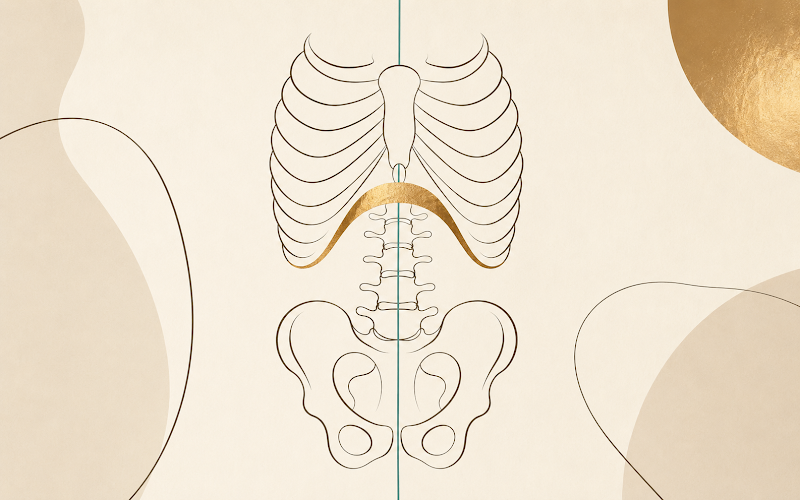
If you’re experienced, it gets more interesting. Your recruitment is already sharp, so the ceiling isn’t effort anymore — it’s access. Neural adaptation doesn’t politely stop after the beginner phase; there’s good reason to think it keeps contributing well into a long training career.4 Compare chronically strength-trained people to untrained ones and you find genuinely different neuromuscular hardware — faster conduction, quicker torque development — the signature of a nervous system that has learned to deliver force.5 And the calmer and better-regulated the system, the more willing it is to give, and the better it recovers between efforts.6
That’s the case for the mechanism. What I observe here — that seasoned lifters post records on a timeline pure muscle-building can’t explain — is a clinical observation from my own practice, not a measured result.† I think the mechanism explains it. I can’t prove that from my gym floor, and I’d rather say so.
The principle is the same at every level. Only the locked door is different — and finding yours is the whole job.
Why this works here
Measured, not guessed
AER on Newbury is a Certified Postural Restoration Center — one of a small number in the country — and I’ve completed the full Postural Restoration Institute curriculum and hold the PRT credential, which roughly 70 practitioners in the United States currently hold. That’s the honest number, and it’s small enough that it doesn’t need inflating.
The discipline behind the method is simple: don’t guess. Every session tests a baseline, restores it, and re-tests — under real load. If the work didn’t hold, it didn’t count. That’s a standard I hold myself to, and it’s the reason I can tell you what changed instead of telling you a story about it.
Find your brake.
The fine print
-
Moritani T, deVries HA. Neural factors versus hypertrophy in the time course of muscle strength gain. Am J Phys Med. 1979;58(3):115–130. The classic demonstration that early strength gains are largely neural, with hypertrophy contributing later. Limitation: a small, early study in one muscle group, in which the neural contribution is inferred indirectly from surface EMG rather than measured directly. The overall finding has held up well across decades of replication; the original itself is small.
-
Del Vecchio A, Casolo A, Negro F, et al. The increase in muscle force after 4 weeks of strength training is mediated by adaptations in motor unit recruitment and rate coding. J Physiol. 2019;597(7):1873–1887. Limitation: a small mechanistic study in healthy young adults using high-density EMG decomposition. It shows how the nervous system changes over four weeks of conventional strength training — it tests no postural, breathing, or restorative intervention of any kind.
-
Weppler CH, Magnusson SP. Increasing muscle extensibility: a matter of increasing length or modifying sensation? Phys Ther. 2010;90(3):438–449. The current mainstream account of acute range-of-motion gains: what changes is sensory tolerance to stretch, not tissue length. Limitation: this is a review-level argument about flexibility interventions in general. It is not a study of the specific ten-second drill above, and the acute effect it describes is transient.
-
Pearcey GEP, Alizadeh S, Power KE, Button DC. Chronic resistance training: is it time to rethink the time course of neural contributions to strength gain? Eur J Appl Physiol. 2021;121(9):2413–2422. Limitation: this is a review and re-appraisal arguing that neural adaptation continues well beyond the early phase — a reasoned reinterpretation of existing evidence, not new experimental proof.
-
Del Vecchio A, Negro F, Falla D, et al. Higher muscle fibre conduction velocity and early rate of torque development in chronically strength-trained individuals. J Appl Physiol. 2018;125(4):1218–1226. Limitation: cross-sectional and associational — it compares trained people to untrained people at one point in time. It cannot establish that training produced the difference, and it says nothing about postural work.
-
Zaccaro A, Piarulli A, Laurino M, et al. How breath-control can change your life: a systematic review on psycho-physiological correlates of slow breathing. Front Hum Neurosci. 2018;12:353. Limitation: a systematic review of heterogeneous studies, and the effects are largely acute — measured around the practice itself. It supports the link between slow breathing and a calmer autonomic state; it does not test strength, recovery between heavy sets, or any performance outcome.
If any of this changed how you think about your own body, an assessment is where that conversation starts.