
The side you always sleep on.
Why your body has a favorite side — and what it costs.
You always sleep on the same side, cross the same leg, lean on the same hip. You assumed those were habits. They're consequences of a structural asymmetry that creates a predictable pattern — and when you can't shift out of it, the problems start.
You have a side.
You know which one. It’s the one you roll to within two minutes of getting into bed. You tell yourself you’ll try the other side tonight. You don’t. Or you do, and it lasts about forty-five seconds before you’re back.
It’s not just sleep. You cross the same leg every time. You lean on the same hip in line at the coffee shop. You shift your weight to the same foot brushing your teeth. Same shoulder for the bag. Same hand leads when you put your hands on your hips.
You thought those were habits. Things you could change if you paid attention.
They’re not habits. They’re consequences.
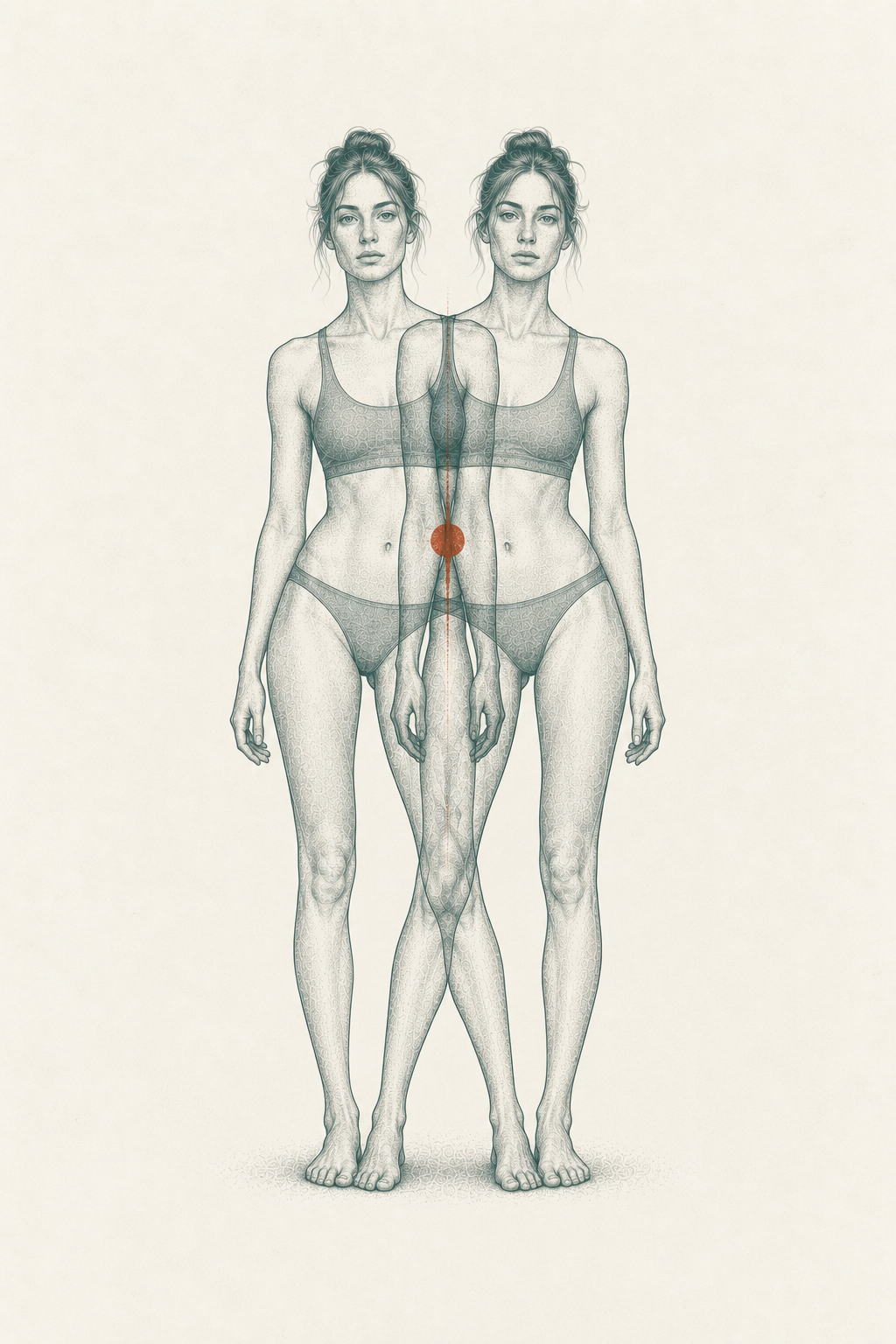
Your body is not symmetrical.
Here’s what almost everyone assumes: your two sides are the same. Mirror image. Train them the same, stretch them the same, expect them to work the same.
That’s wrong at the level of anatomy.
Your liver — about three pounds of it — sits under the right side of your diaphragm. Your heart sits left of center. Your right lung has three lobes. Your left has two, because it’s sharing space with the heart. The right side of the diaphragm is bigger, thicker, and sits higher than the left, because the liver gives it a firmer platform to push against.1
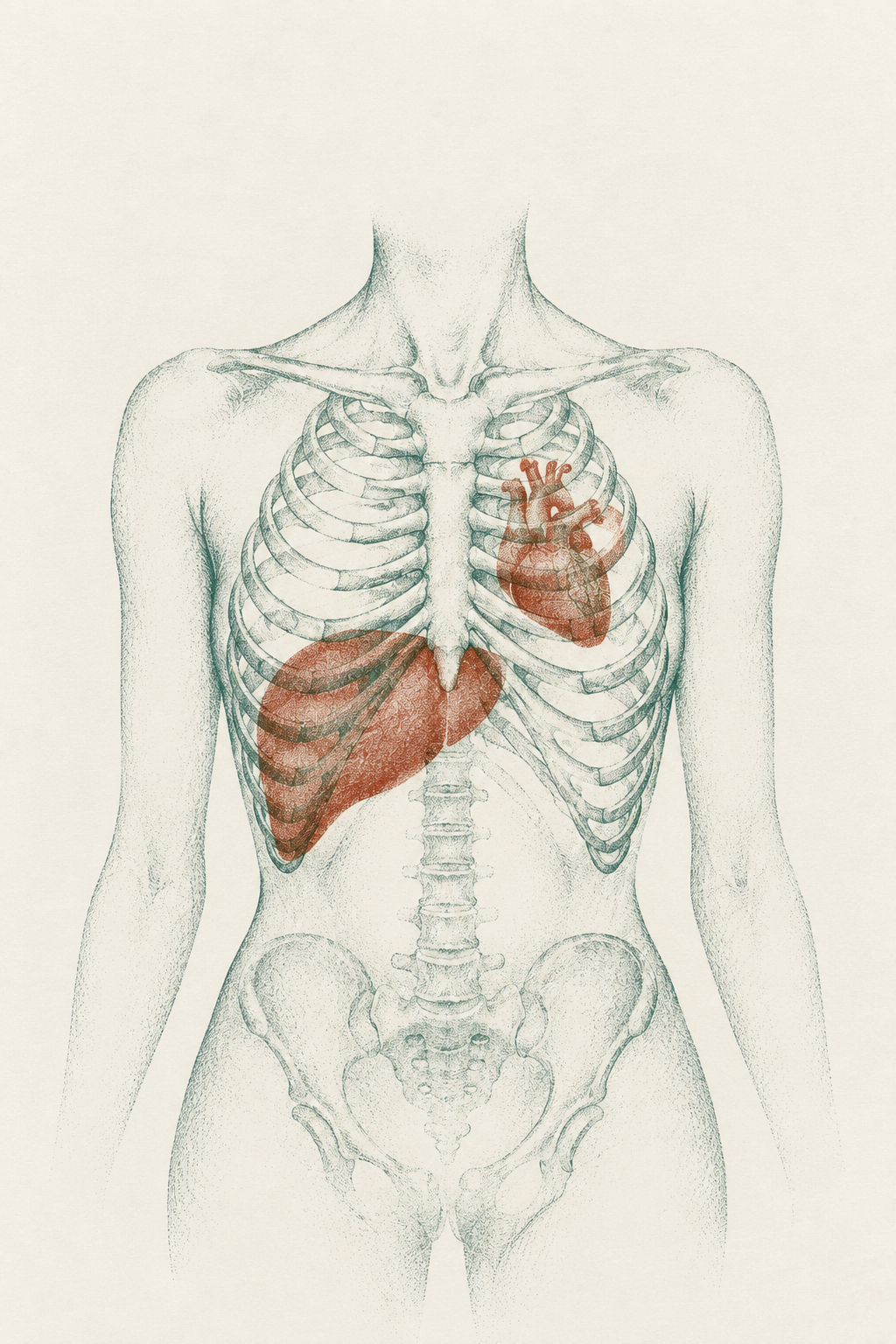
These aren’t small differences. The diaphragm connects your ribcage to your spine to your pelvis. It’s your primary breathing muscle and a major postural muscle. If it’s built differently on each side, then the way you breathe and the way you stabilize your trunk are different on each side. Not a little bit. Architecturally.
The pattern.
That asymmetry creates a predictable resting position.† Your pelvis tends to orient one direction. Your ribcage counter-rotates. Your body settles into a kind of standing spiral — not because anything is wrong, not because you’re weak or tight, but because the architecture tilts that way.†
When things are working well, you move through this pattern. You shift weight left, then right. You rotate both ways. You breathe into both sides of your chest. The resting position exists, but you don’t live there. You pass through it like a rest stop, not a permanent address.†
When you get stuck — when you lose the ability to shift out — the pattern becomes a fixed position. The side you always lean to. The hip that always feels tight. The shoulder that won’t drop. The side you always sleep on.†
What “stuck” looks like.
It’s not dramatic. It looks like someone who stands with their weight a little to the right. Whose left hip always feels tighter than the right. Whose right shoulder sits a little forward. Who can only get a full breath on one side.
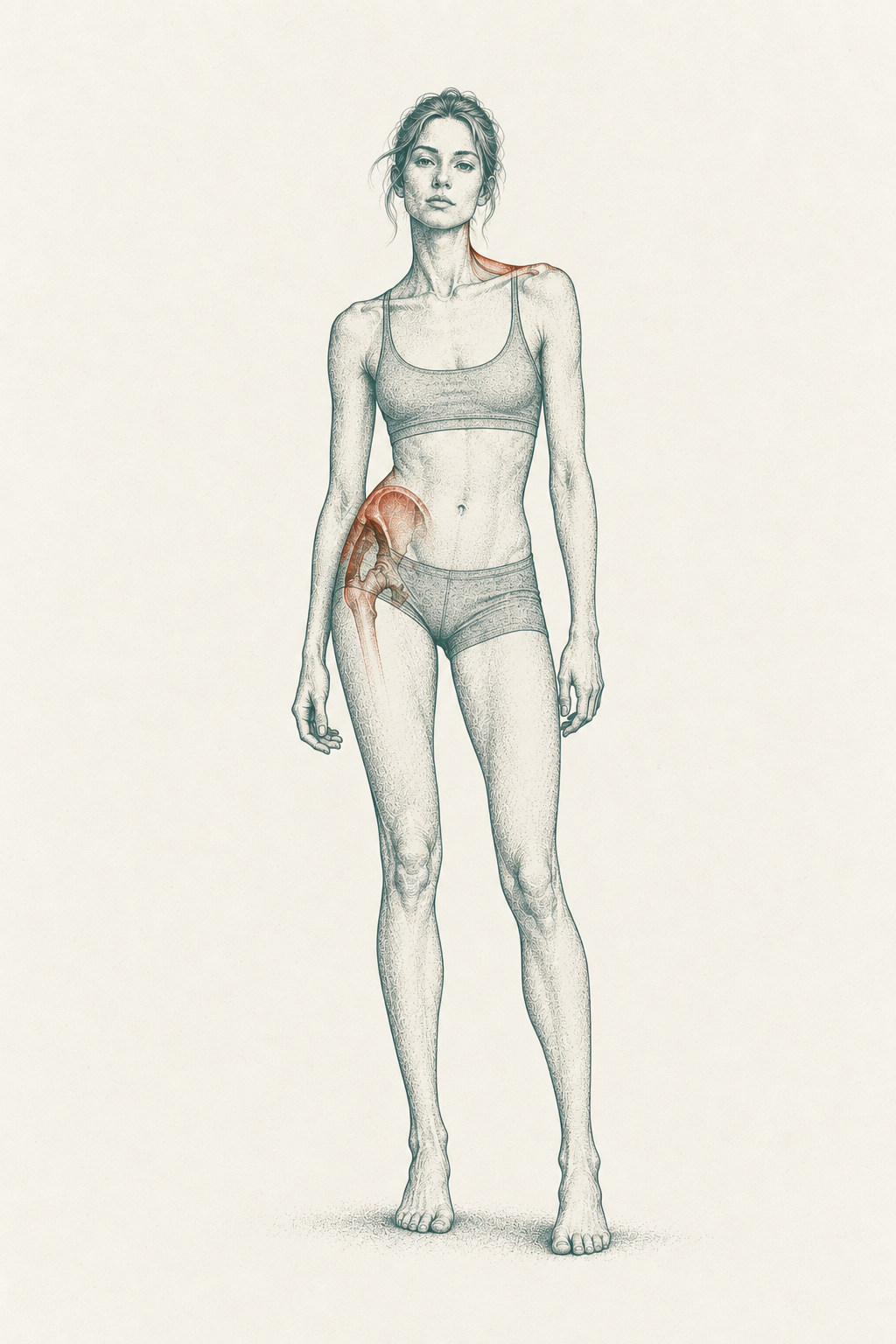
It looks like the runner whose left IT band flares up every spring. Same time, same side, like clockwork. Or the desk worker whose right neck and shoulder won’t let go no matter how much they stretch. Or the person who’s been told their SI joint is “out” three times a year and gets it “put back” three times a year.†
It looks normal. It looks like everyone. That’s the point. Nearly everyone has this pattern to some degree. The question isn’t whether you have it. It’s whether you can get out of it.†
Why stretching doesn’t fix it.
The tight hip. The locked-up shoulder. The side that won’t release. Standard approach: stretch what’s tight, strengthen what’s weak.
Here’s the problem. What feels “tight” isn’t always short. A muscle that the nervous system is holding on — keeping active to stabilize a position the body has committed to — feels tight. It resists stretching. And it goes right back to where it was within hours. That’s not a length problem. That’s a tone problem. Tone is set by the brain, not the muscle.†
Strengthening the other side runs into the same thing. If the system is locked into a pattern, the muscles on one side aren’t weak. They’re inhibited. Turned down because the pattern doesn’t need them right now. Loading them with resistance doesn’t change why they were turned down. You’re adding force to a system that’s already compensating.†
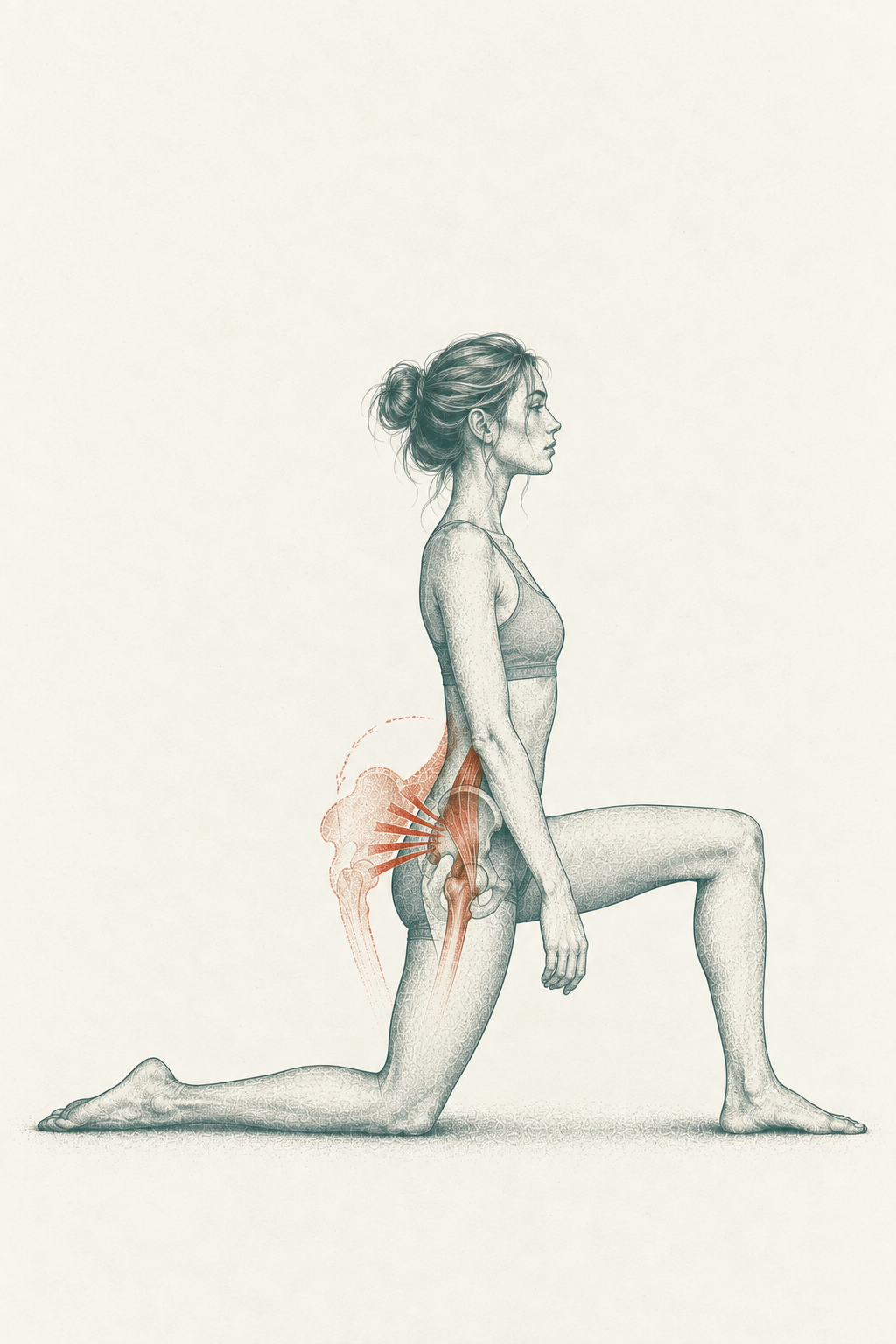
This is why the same problems keep cycling. Stretch, feel better, tighten back up. Strengthen, feel balanced for a week, drift back. Get adjusted, feel great for two days, right back where you started. The pattern comes back because nothing changed the thing maintaining it.†
What actually changes the pattern.
Position. Breathing. Sensory input. Same three variables that showed up in the breathing work from the last several pieces — but aimed at the asymmetry, not just the rate.†
A specific position takes away the mechanical advantage of the muscles holding the pattern. A specific breathing strategy — exhaling fully on the side that can’t exhale — gets the diaphragm working on both sides again. Sensory input — what your feet feel, what your eyes track, what your hands press against — tells the nervous system that the other side exists and is safe to use.†
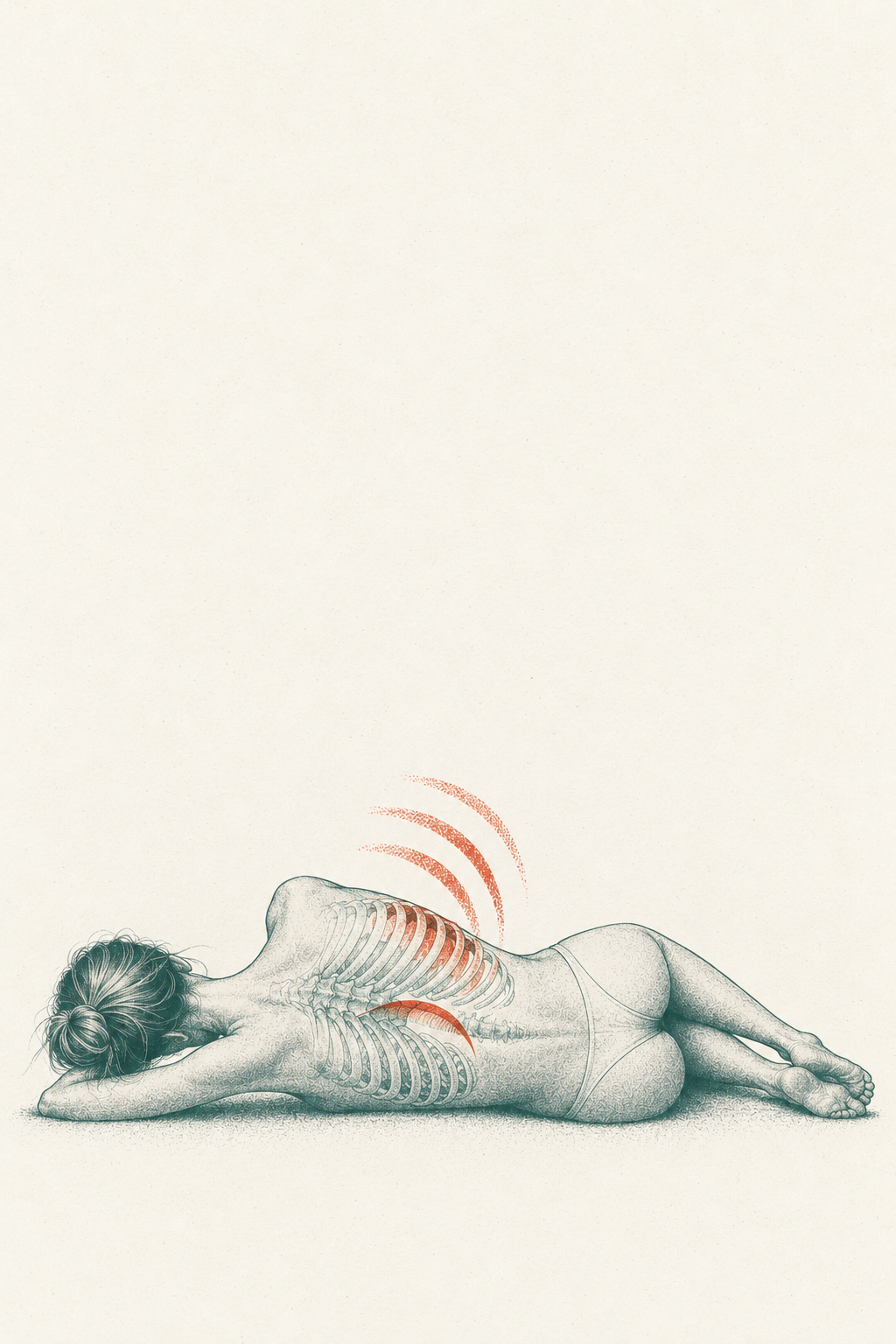
That’s what an assessment figures out. Where you are in the pattern. What’s keeping you there. And which combination of position, breath, and input lets you shift out of it. Not forcing symmetry — the asymmetry is built in and it’s not going anywhere. Restoring the ability to alternate. To move through both sides instead of being stuck on one.†
What you can check right now.
Three things. Thirty seconds each.
Stand up. Close your eyes. Wait five seconds. Notice which hip is carrying more weight.
Sit down. Cross your legs. Don’t think about it. Just cross them. Which one went on top?
Tonight, when you get into bed, notice which side you turn to first.
If all three answers are the same side, your system has a strong preference. That’s not a diagnosis — everyone has this preference to some degree. The question is whether you can pick the other side and have it feel just as natural. If you can’t — if the other side feels wrong, or unstable, or like you can’t settle — that’s the pattern. And it’s not something you can think your way out of.
The side you always sleep on isn’t random. It isn’t a comfort preference. It’s the position your system has committed to — and the one it can’t leave on its own.
That’s where an assessment starts. Not what’s tight or weak. Where your system sits, and what it would take to move.
Book an assessment at aerboston.com
The fine print
- Standring S, ed. Gray’s Anatomy: The Anatomical Basis of Clinical Practice. 42nd ed. Elsevier; 2021. Chapters on the thorax and diaphragm. The structural asymmetry of the diaphragm — right hemidiaphragm higher, larger, and supported by the liver; left hemidiaphragm smaller and sharing the thoracic cavity with the heart — is standard human anatomy, described in every major anatomy text. What the clinical framework below does with that asymmetry (predicting a resting orientation, interpreting muscle tone as pattern-driven rather than length-driven) is a separate layer of interpretation.
The Letter
The writing here is the why. The letter is where the what to do lives — the protocol, the drill, the case behind each piece.
If any of this changed how you think about your own body, an assessment is where that conversation starts.